- QuantNomad's Newsletter
- Posts
- Perpetual Futures Are Not What You Think
Perpetual Futures Are Not What You Think

Vadim Cissa
March 22, 2026
Perpetual futures have become one of the most widely traded instruments in modern markets—especially in crypto. They offer constant exposure, deep liquidity, and easy access to leverage.
But beneath that simplicity lies a very different structure.
Perpetual futures are not just “futures without expiry.”
They are a system driven by funding flows, leverage, and positioning dynamics.
Unlike traditional futures, where pricing is anchored by time and carry, perpetuals rely on funding rates—a continuous transfer of capital between traders. Over time, this can significantly impact performance.
This leads to a key realization:
👉 In perpetual futures, being right on direction is not enough.
Your P&L is shaped not only by price, but also by:
Funding costs
Market positioning
Liquidation dynamics
In many cases, price moves are less about fundamentals and more about who is overleveraged and forced to unwind.
This is why these markets often exhibit:
sudden volatility spikes
aggressive squeezes
rapid reversals
Understanding these mechanics is essential if you want to trade them effectively.
Read the Full Research
I’ve put together a full breakdown of:
how perpetual futures really work
what most traders misunderstand
and how to think about them from a structural perspective
New Release: Forward Curve Indicator
I’ve also just released my first Pro future indicator on TradingView, designed to track and visualize the forward curve in real time.
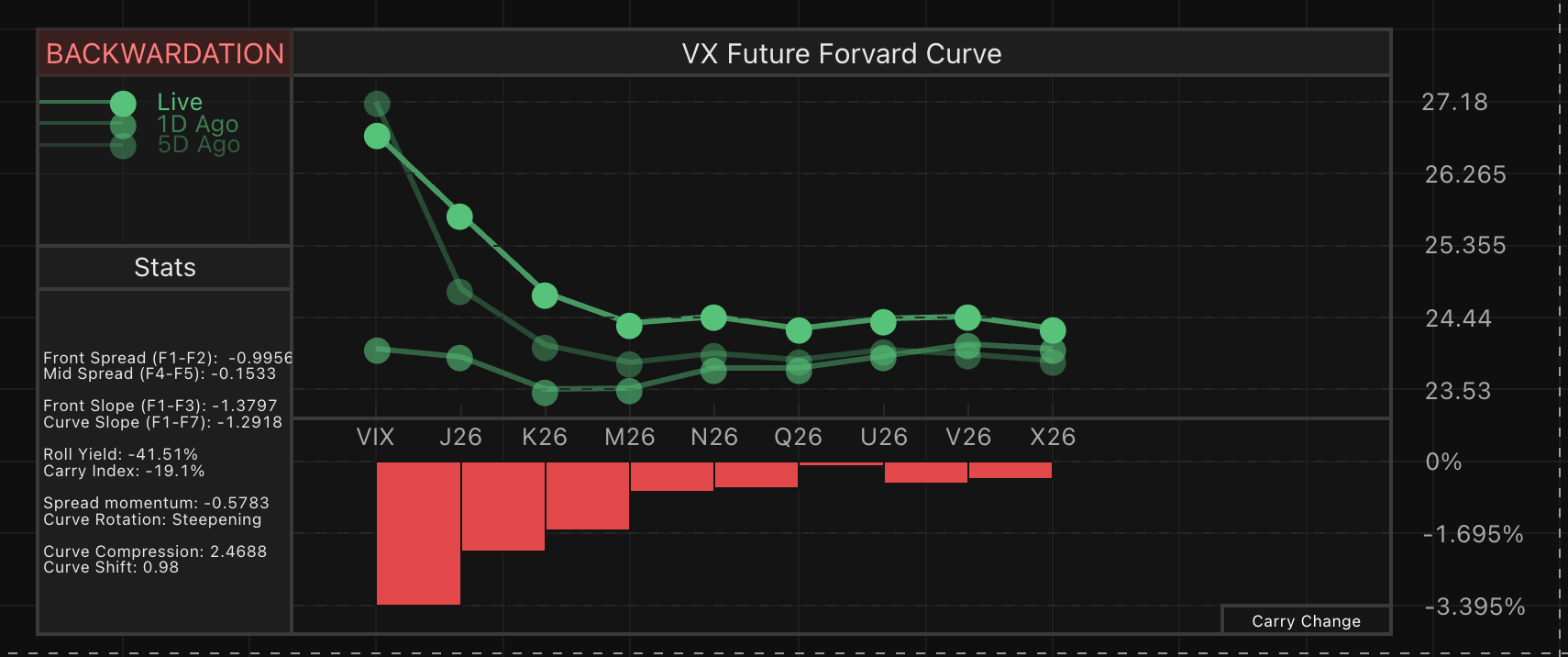
It helps you:
identify contango/backwardation shifts
monitor curve compression/steepening
add structural context to your trades
Attio is the AI CRM for modern teams.

Connect your email and calendar and Attio instantly builds your CRM. Every contact, every company, every conversation — organized in one place. Then ask it anything. No more digging, no more data entry. Just answers.