- QuantNomad's Newsletter
- Posts
- AI Copilot Workflow + New Divergence Tool on TradingView
AI Copilot Workflow + New Divergence Tool on TradingView
I wanted to share two updates with you — one on workflow, and one on tools.

Vadim Cissa
April 05, 2026
🎥 TradingView AI Copilot — how I actually use it
I just published a new video where I break down how I’m using TradingView AI Copilot in practice.
There’s a lot of hype around AI tools, but the real value (at least for me) is not in replacing analysis — it’s in structuring it better and faster.
In the video, I go through:
how I use it to quickly frame market context
how it helps refine ideas instead of generating random ones
and where it actually saves time vs where it doesn’t
The goal is simple: reduce noise and get to clearer decisions faster.
📊 New indicator: Source-Aligned Oscillators (Divergence Tool)
I’ve also released a new indicator on TradingView focused on a very common — and often overlooked — issue with divergence.
Most traders compare:
price → using highs and lows
oscillators → calculated on close
This creates a mismatch.
On large candles, the difference between low and close (or high and close) can be significant.
So you often end up seeing divergence signals where, in reality, not much has changed in terms of momentum.
The idea behind this tool is simple:
👉 If you want to analyze divergence properly, you should align the data source.
With this indicator, you can:
display oscillators (RSI, ROC, Momentum, MACD Histogram, CMO, Stochastic RSI)
choose different sources (Close, HL2, HLC3, OHLC4, candle body)
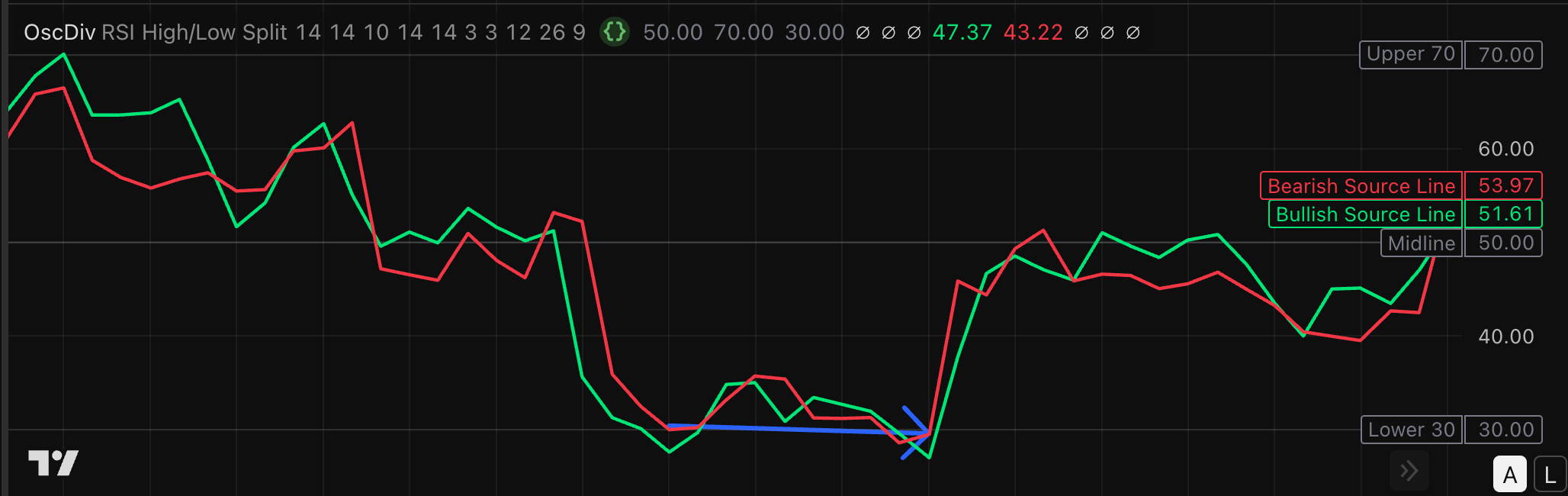
and even use a High / Low split mode
That last one is especially useful — it lets you see:
how an oscillator behaves on lows (bullish context)
vs on highs (bearish context)
This makes it much easier to understand whether a divergence is meaningful — or just caused by a single wick.
As always, I’m interested in your feedback — especially how you approach divergence and whether you’ve noticed this issue before.
Are you tracking agent views on your docs?

AI agents already outnumber human visitors to your docs — now you can track them.